
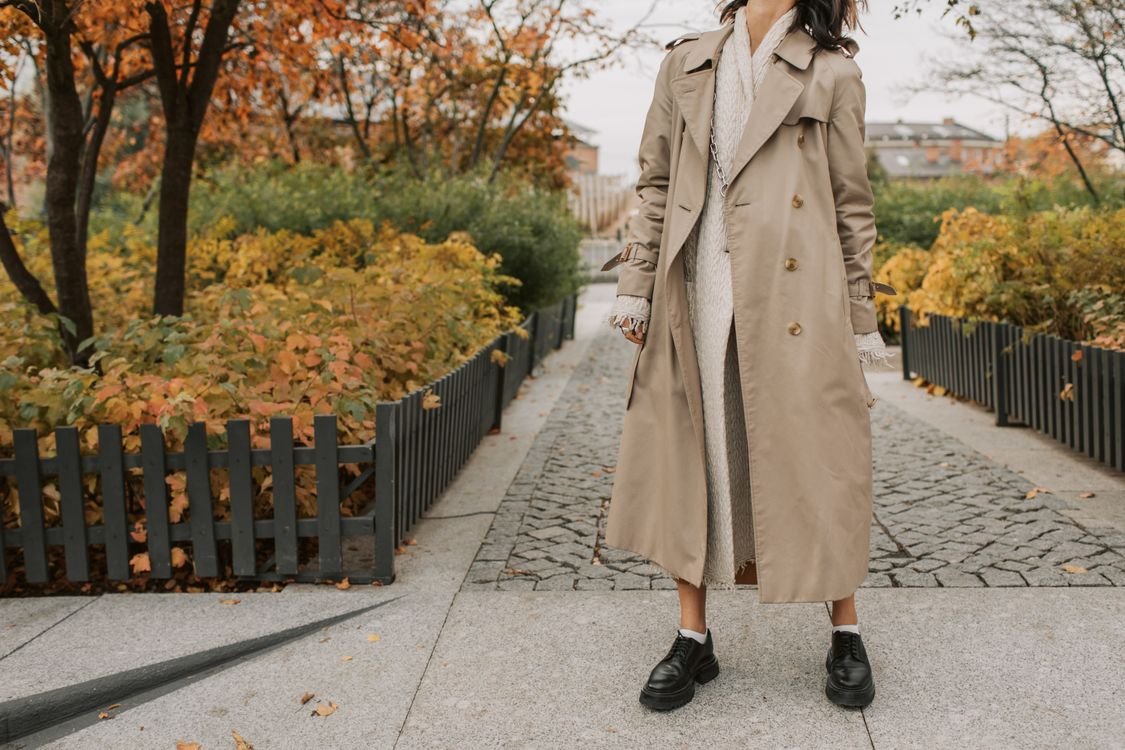
Every year there are a few awkward weeks when the wardrobe seems to argue with the weather.
Mornings are cold. Afternoons are warm. Your summer dresses feel too bare by 8 AM and exactly right by 2 PM, while your heaviest knits are still too much. Most of us respond by buying new autumn clothes in a hurry — but the smarter, cheaper answer is already hanging in your wardrobe. Transitional dressing is simply the art of carrying summer pieces into autumn with layering, swaps, and colour, instead of replacing them.
The Logic: Base, Warmth, Structure
Almost every good transitional outfit follows the same order. Start with the summer piece as your base. Add one layer for warmth. Finish with one piece of structure on top.
The base is the light thing you already love: a slip dress, a tee, a cotton shirt. Warmth is the practical layer: a fine knit, a cardigan, tights, or a long-sleeved top worn underneath. Structure is what makes the outfit look intentional rather than improvised: a blazer, a denim or leather jacket, a belt, or a proper shoe. Skip the structure layer and you look like you got caught by the weather. Add it, and the exact same dress reads as a deliberate autumn outfit.
Work in that order when you get dressed and the guesswork disappears. Base on, then ask “am I warm enough?” Then ask “does this look finished?” Answer both, and you are done.
The Two Swaps That Change Everything
Tights are the single hardest-working item in transitional dressing. Adding tights under a dress or skirt instantly moves it a month later in the year, warms the outfit without bulk, and lets you keep wearing pieces you would otherwise retire. Sheer tights suit early autumn; opaque pairs carry you much further. If tights feel dull, treat them as part of the outfit’s colour story rather than an afterthought.
The second swap is footwear. Sandals announce summer more loudly than almost anything else. Exchange them for loafers, ankle boots, or clean trainers and the same outfit shifts season immediately. Boots in particular change proportions beautifully with midi lengths — the dress stays light, but the outfit gains weight and intent at the bottom, which is exactly what autumn dressing needs.
Deepen the Colour Palette
You do not need new clothes to change the season’s colours; you need new combinations. Summer wardrobes lean on white, pastel, and bright shades. Autumn asks for depth: burgundy, chocolate, olive, navy, camel, and charcoal.
The trick is to add one deep colour to a light outfit rather than rebuilding it. A white summer dress with a burgundy cardigan and brown boots is autumn. A pale blue shirt with charcoal trousers and a camel coat is autumn. Keep your light pieces, but ground them. Accessories do this cheaply too — a darker bag, belt, or scarf can deepen a whole outfit in seconds.
Mix Fabrics: Light With Textured
Fabric mixing is what makes layered outfits look rich instead of bulky. Pair something light and smooth with something textured and warm: linen or cotton against knit, denim, suede, wool, or corduroy. The contrast is the point. A silky skirt with a chunky knit works because the fabrics argue a little. Everything in the same thin cotton, by contrast, just looks like summer with a cardigan thrown over it.
Linen deserves a special mention here, because it transitions better than people think — especially if you use the tricks in our guide to how to wear linen without looking wrinkled. A linen shirt under a blazer, or linen trousers with a knit and loafers, can carry you deep into the season.
The 5 Summer Pieces That Transition Best
1. The slip dress. In summer it stands alone. In autumn, layer a thin long-sleeved top or fine knit underneath it, or a chunky cardigan over it, add tights and ankle boots, and it becomes one of the most versatile pieces you own. This is the same restyling instinct behind how I wore the same dress 5 different ways in one week — one good dress, many outfits, if the layers around it change.
2. The white shirt. Summer’s shirt-and-shorts staple becomes autumn’s best layering base. Wear it under a sleeveless knit or a jumper with the collar and cuffs showing, button it under a blazer, or leave it open over a tee on milder days. With jeans and loafers it is a complete outfit in almost any month.
3. Denim. Jeans barely need help — swap the sandals for boots and the vest top for a knit and they are ready. A denim jacket transitions too, worn over a dress with tights, or layered under a longer coat when it gets colder. Denim’s weight sits naturally between seasons, which is why it anchors so many transitional outfits.
4. The midi skirt. Summer’s floaty midi works beautifully with a fitted knit tucked in, a belt for structure, and boots that meet the hem. Satin and silky skirts are especially good here because the fabric contrast with a warm knit looks deliberate and a little dressy, even though the outfit takes minutes.
5. The plain tee. Do not underestimate it. A plain tee under a blazer with trousers and loafers is a clean autumn outfit. Under a cardigan, under a slip dress as a base layer, or with a midi skirt and trainers on a warm afternoon, it keeps earning its place long after August ends.
One Honest Note: Do Not Pack Summer Away Too Early
Here is the mistake I made for years: at the first cold morning, I packed every summer piece away and committed fully to autumn, then spent three warm weeks uncomfortable and slightly annoyed at my own wardrobe.
In-between weather rewards keeping both rails available. Leave the summer bases accessible, keep the knits and jackets where you can reach them, and let the day’s forecast, not the calendar, decide. Transitional dressing is not a weekend project. It is a season of mixing, and the mixing only works if both halves of your wardrobe are still in the room.
That is also why this approach pairs so well with a smaller, harder-working wardrobe, as we explored in how to build a capsule wardrobe with just 20 pieces. Pieces chosen to layer earn their space twice. So before you shop for autumn, shop your own wardrobe first. The slip dress, the white shirt, the denim, the midi skirt, and the plain tee are probably already there — they just need tights, boots, one deep colour, and a layer of structure to walk confidently into the new season.