
For most of my adult life, I washed my hair every other day — and on gym days, every day.
If my roots looked even slightly flat, I reached for the shampoo. I told myself my hair was just “oily” and that daily washing was unavoidable. Then I kept hearing the opposite claim: that washing less often could leave hair looking healthier, less frizzy, and easier to manage, once your scalp adjusted.
So I tested it properly. For one month, I washed my hair only twice a week — Mondays and Thursdays, roughly — and kept honest notes on my scalp, my ends, and my patience.
Why I Wanted to Try Washing Less
My hair was in that frustrating in-between state: oily at the roots by day two, dry and straw-like at the ends. Washing fixed the roots and punished the ends. Every wash meant heat styling too, which made the cycle worse.
I had already seen a version of this lesson with my skin. When I switched to a 3-step skincare routine for 30 days, doing less, consistently, worked better than doing more, frantically. I wondered if hair worked the same way: fewer washes, less stripping, more balance.
My rules were simple. Two proper washes a week with shampoo and conditioner. On other days I could rinse with water only if I really needed to, use dry shampoo, and wear my hair up — but no sneaky extra shampoo washes. I also stopped putting conditioner near my scalp; conditioner went on the lengths and ends only.
Weeks 1–2: The Oily Transition Nobody Warns You About Properly
Let me be honest: the first two weeks were not cute.
By day three of my first stretch, my roots looked genuinely greasy — not “lived-in,” just oily. My scalp felt itchy by the evening, and I caught myself touching my hair constantly, which only made it look worse. Week two was barely better. This is the phase most people quit in, and I understand why.
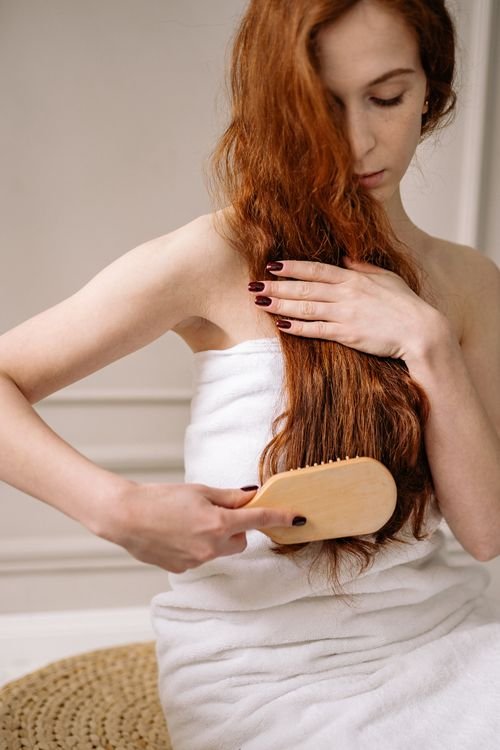
What helped was strategy, not willpower. Dry shampoo worked far better when I applied it before bed, not in the morning panic, so it had hours to absorb oil. A boar-bristle brush helped move oil away from the roots and down toward my drier ends, which sounds old-fashioned and absolutely worked. And I planned my wash days around my life: if I had photos, an event, or a day I wanted to feel polished, I counted backwards and washed the day before.
The other lifesaver was hairstyles. Day-one hair was worn down. Day two was a half-up style. Day three was a braided ponytail, a claw clip, or a low bun. A slicked-back bun on the greasiest day actually looked intentional — nobody knew it was a survival tactic.
Surviving Non-Wash Days: Rinse-Only, Updos, and Lower Standards
Around week three, I added one tool I wish I had used sooner: the rinse-only refresh. After a sweaty workout, I rinsed my hair with water only, massaged my scalp with my fingertips, and conditioned just the ends. It did not feel as clean as shampoo, but it removed the sweaty feeling without resetting my scalp completely. I used it sparingly — maybe once a week — so my two real washes still did the heavy lifting.
I also had to lower my standards in a healthy way. Day-three hair is never going to look like day-one hair, and chasing that look was exactly what had kept me over-washing for years. Accepting “neat and presentable” instead of “freshly washed” made the whole experiment livable. Hats and headbands helped on weekends, and keeping my hands off my hair helped more than any product.
There is a cosmetic honesty point here too. Washing less did not make my hair grow faster, thicker, or magically transformed — anyone promising that is overselling it. What it changed was more ordinary: how quickly my roots looked oily, how my ends felt, and how much heat and product my hair had to endure each week.
Week 4: What Actually Changed on My Scalp and Ends
By week four, the shift I had been promised finally showed up — quietly.
My roots on day two looked like my old day one. I could go three full days before the greasy feeling arrived, and the itchiness from the first fortnight had mostly settled. My scalp simply seemed less frantic. Whether that is “retraining” or just my oil production and habits settling into a new rhythm, I can only report what I saw in the mirror: the oil came slower.
The ends were the bigger surprise. With fewer washes came fewer rounds of blow-drying and straightening, and my ends felt softer and looked less frazzled. That effect doubled down on what I learned when I explored what happens when you stop using heat on your hair — less heat, applied less often, is kinder than any mask I have tried. My colour also seemed to fade more slowly, which makes sense when it is being washed half as often.
Not everything improved. My hair had less volume on non-wash days, and dry shampoo left a slightly dull finish by day three that no amount of brushing fully fixed. I also learned that product build-up is real: by the end of the month, one wash a week needed to be a thorough, double-cleanse wash, or my scalp never felt properly clean.
My Honest Verdict — And Why Your Hair Type Matters
Here is my honest verdict: I am keeping the twice-a-week routine, because for my hair — fine to medium, with an oily scalp and dry ends — it works. But I do not believe this is universal, and the “everyone should wash less” advice deserves some pushback.
If your scalp is naturally dry, you may already wash once or twice a week without trying, and stretching further could leave your scalp flaky and uncomfortable. If your scalp is very oily, or you exercise and sweat heavily every day, twice a week might genuinely not be enough, and that is not a failure of discipline. Dandruff, scalp conditions, and very fine hair that shows oil quickly are all real reasons to wash more often. Washing frequency is a cosmetic and comfort choice, not a moral one — over-washing and under-washing both have downsides, which is a theme in these common beauty mistakes that are aging you faster than you think.
My practical advice: stretch by one day at a time, not all at once. Add a day, give it two weeks, and judge by how your scalp feels, not by an influencer’s calendar. Use dry shampoo the night before, keep conditioner off your scalp, and plan your hairstyles like you plan outfits.
A month ago I thought my hair needed washing constantly. It turns out it mostly needed me to stop panicking on day two. Twice a week is my rhythm now — and my ends, at least, are very grateful.